As temperatures change across Snohomish, King, and Skagit Counties, furnaces, water heaters, and gas ranges start working harder than they have all year. That extra strain is exactly when small problems in aging gas lines and connections tend to show up. A leak that sat quiet all summer can become obvious the first cold night the furnace kicks on.
Gas leaks are not like a slow drain or a running toilet — they are a genuine safety concern. A gas leak can become a serious hazard faster than most homeowners expect. Whether the source is a water heater, a furnace, a range, or aging black iron pipe behind a wall, knowing the warning signs and having a fast, trusted response matters.
At Machias Power and Plumbing, the same team that has handled electrical panels, generators, and rewires across the area for 20 years now brings that same hands-on, dedicated approach to plumbing and gas line work.
Common Gas Leak Warning Signs Around the Home
Gas leaks do not always announce themselves the same way. Some are obvious, others build slowly.
The most recognizable sign is smell. Utility companies add a rotten-egg or sulfur-like odor to natural gas and propane specifically so leaks are noticeable.
Signs of a possible gas leak include:
- A persistent rotten-egg or sulfur smell near appliances, the meter, or along exterior walls
- A hissing or whistling sound near a gas line, valve, or appliance connection
- Dead or discolored vegetation in an otherwise healthy patch of yard, especially along the gas line’s path
- Unusually high gas bills without a clear reason
- Pilot lights that will not stay lit, or that burn yellow and flickering instead of steady blue
A yellow or flickering flame instead of a crisp blue one often points to incomplete combustion, which can mean a ventilation or gas supply issue worth having checked.
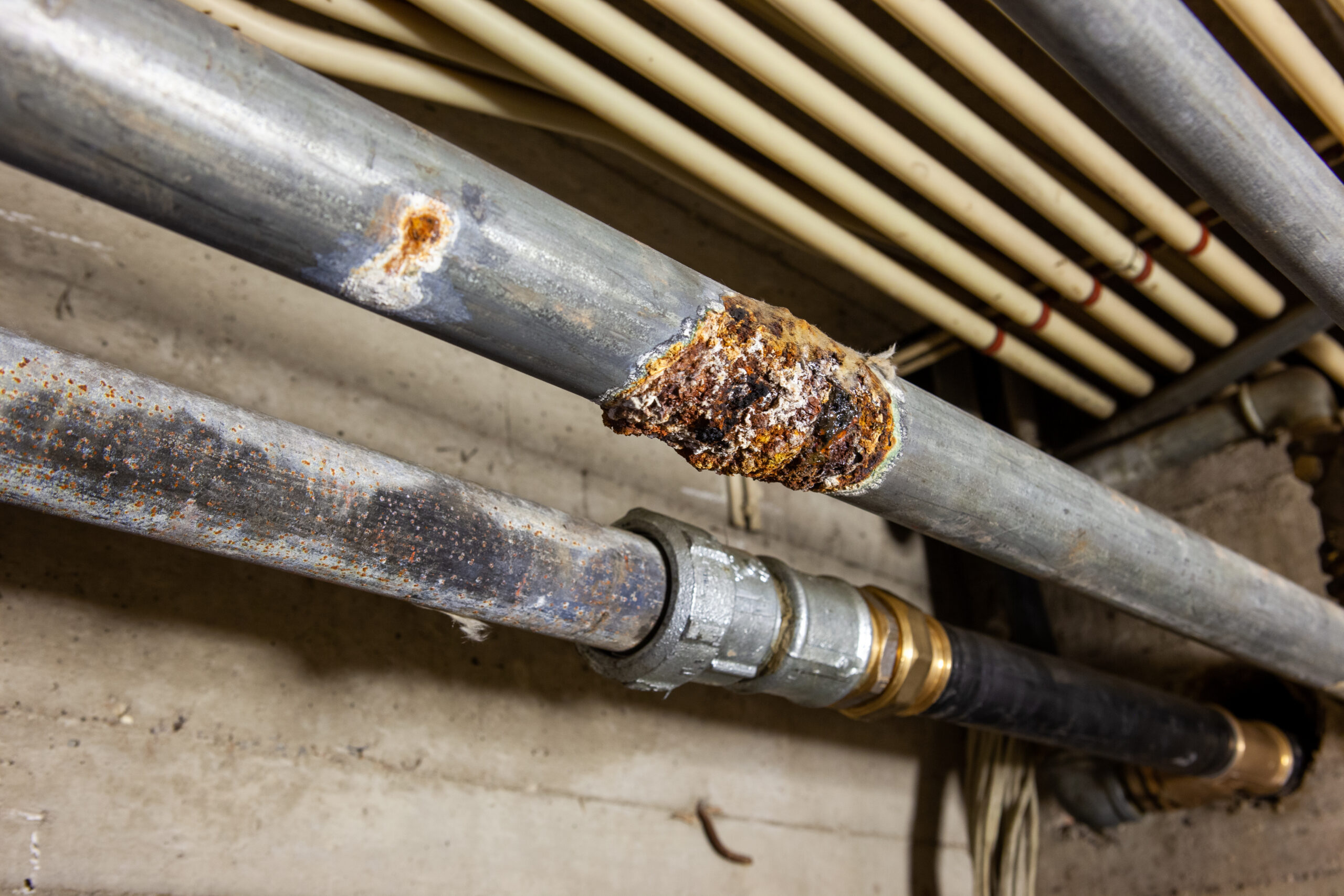
Older homes in this region are especially prone to aging black iron pipe and fittings that have loosened or corroded over the decades. Homes with older water heaters, furnaces, or DIY appliance swaps — a range or dryer installed without a licensed plumber — carry extra risk, since even a slightly under-tightened fitting can leak.
When to Call an Emergency Plumber
Not every gas concern requires an emergency call, but some situations should never wait.
Red flags that call for immediate action:
- A strong or worsening gas odor (reminiscent of rotten eggs or sulfur) anywhere in or around the home
- Hissing near a meter, appliance, or shutoff valve
- Physical symptoms like headache, dizziness, or nausea that ease once you leave the house
- Visible damage to a gas line from digging, remodeling, or a fallen tree or branch
If you smell gas or suspect a leak:
- Leave the house immediately, and get others and pets out with you
- Do not flip light switches, use your phone inside, or start your car in an attached garage
- Do not try to locate the leak yourself or shut off the gas at the meter unless you have been trained to do so
- Once you are a safe distance away, call your gas utility’s emergency line and a licensed plumber
What you should not do is “wait and see” if the smell goes away or search for the leak with a lighter or match. Gas leaks are one of the few home issues where being cautious costs you nothing and being wrong can cost everything.
How Machias Handles Emergency Gas and Plumbing Calls
At Machias Power and Plumbing, we understand the mix of aging housing stock, well-intentioned DIY work, and the PNW moisture that shows up here again and again.
When you call about a suspected leak or gas appliance issue, the first step is a safety-focused conversation over the phone.
A plumbing contractor may ask:
- Where and how strong is the smell, and when did you first notice it?
- Have you already contacted the gas utility?
- Is anyone experiencing symptoms like dizziness or headache?
- Has there been recent digging, remodeling, or storm damage near the gas line?
Those questions help determine urgency and give clear safety guidance before anyone steps foot back inside.
On site, our priority is finding and isolating the source safely, whether that means a corroded fitting, a failing water heater connection, or a damaged line. Once the home is safe, our team walks through what we’ve found in plain language, laying out a repair plan built to last — not a patch job that raises the same worry the next time the pilot light flickers.
Protect Your Home With Fast, Reliable Emergency Plumbing Help
Gas issues are not something to guess about or put off. If you notice a smell, a hissing sound, or an appliance that is not behaving the way it used to, Machias Power and Plumbing is ready to respond quickly, diagnose the problem, and get your home back to safe and steady.
To schedule service or talk through what you are noticing, contact us today.