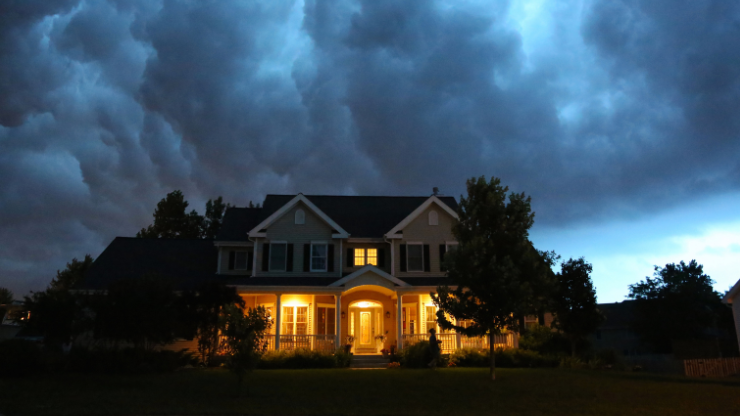
The first real windstorm of the season tends to catch Washington homeowners off guard. Trees that held up all summer drop limbs onto power lines, outages stretch from a few hours into a few days, and generator installers across the region suddenly have more calls than they can return.
The homeowners who ride out that first storm with the lights on are usually the ones who planned ahead in September or October. A standby generator is not something that can be bought on Monday and running by Tuesday. Between sizing, permitting, fuel connection, and inspection, a proper installation takes time, and that timeline only gets longer once half the county is already in the dark.
That is what makes fall the best window to install. The weather is still workable for outdoor site prep, scheduling is far more flexible, and the work can be finished before storm season really settles in.
Why Timing Matters More Than Most Homeowners Expect
A standby generator is a permanent piece of home equipment, not an appliance. It ties into the electrical panel, connects to a natural gas or propane supply, and sits on a prepared pad outside the home. Each of those pieces has its own steps, and most of them cannot be rushed.
A typical standby generator installation involves:
- A site assessment to choose placement, check clearances, and confirm fuel access
- Load sizing to match the generator to what the household actually needs to run
- Electrical and fuel permits through the local jurisdiction
- Pad preparation and setting the unit
- Installing an automatic transfer switch and tying into the panel
- Connecting the gas or propane line and confirming supply capacity
- Inspection, startup, and a walkthrough of how the system operates
None of those steps are unusual, but together they add up. Permit timelines vary from one jurisdiction to the next, and equipment availability can shift with demand.
Demand is a sizeable consideration. After a major outage, interest in standby generators spikes almost overnight. Homeowners who just spent three days without heat all decide at the same time that their home needs a generator, and lead times stretch accordingly. Starting the process in the fall means getting in ahead of that wave instead of waiting behind it.
What a Multi-Day Outage Does to a Home
A short outage is an inconvenience. A long one is a different situation entirely, and storms in this region can leave neighborhoods without power for days at a time. It helps to walk through what actually happens as the hours go by.
The first few hours
The lights go out, the internet drops, and anyone working from home is suddenly not working. Garage doors need to be opened by hand. Most households can manage this stretch with flashlights and patience.
By the end of the first day
The refrigerator and freezer have been warming steadily, and food safety becomes a real question. The house is getting cold. Even homes with a gas furnace lose heat, because the furnace still relies on electricity to run its ignition and blower fan.
Day two and beyond
This is where an electrical problem starts turning into a plumbing problem.
- Sump pumps stop running. In a heavy rain, a basement or crawlspace that depends on a sump pump can take on water quickly.
- Well pumps go silent. Homes on a private well, common across rural Skagit County and outlying parts of Snohomish County, lose running water entirely, including the ability to flush toilets.
- Electric water heaters stop heating. Hot water runs out quickly, and showers turn cold.
- Pipes become vulnerable. If a storm is followed by a cold snap, an unheated home puts exposed and exterior-wall plumbing at risk of freezing.
For households with medical equipment that depends on power, the stakes are even higher. A standby generator keeps all of these systems running automatically, often within seconds of the outage, whether anyone is home or not.
Standby Power That Works, Without Lifting a Finger
Portable generators have their place, but they ask a lot of a homeowner in the middle of a storm. Someone has to drag the unit outside, keep it fueled, run extension cords, and decide which appliances get power. Connecting a portable unit to a home without a proper transfer switch is also a serious hazard, both to the household and to utility crews working on the lines.
A permanently installed standby generator works differently. An automatic transfer switch senses the outage, starts the generator, and shifts the home over to backup power without anyone touching a thing. When utility power returns, it switches back and shuts the generator down on its own. Because it runs on natural gas or propane, there are no gas cans to refill at 2 a.m.
Sizing is where a lot of the value is decided. Some homeowners want whole-home coverage. Others are better served by a smaller unit that covers the essentials, such as the furnace, refrigerator, well or sump pump, and a few circuits. The right answer depends on the home, the fuel supply, and how the household actually lives during an outage.
Why a Generac Authorized Dealer Matters
Machias Power and Plumbing is a Generac Authorized Dealer. That means our team installs and services Generac standby generators to the manufacturer’s standards, with direct access to equipment, parts, and product support.
For homeowners, that comes with a few practical advantages:
- Installation done to Generac specifications, which helps keep the manufacturer warranty in good standing
- Help with future service needs
- Genuine replacement parts and routine maintenance from the same team that installed the unit
Generac is not the only option. Machias Power and Plumbing also offers other trusted brands, and the recommendation always comes down to what best fits the home, the fuel supply, and the budget.
Spreading Out the Cost
A standby generator is a significant investment, and the timing of storm season does not always line up with the household budget.
For homeowners who would rather not pay the full amount up front, financing is available on generator installation for qualifying customers. Checking eligibility does not affect credit scores, and terms are laid out clearly before anything is signed.
Homeowners can see if they qualify in just a few minutes.
How a Generator Installation Comes Together
As a local contractor serving Snohomish, King, and Skagit Counties, Machias Power and Plumbing keeps the generator process simple and direct, with no call centers in between.
1. Contact Us
A homeowner calls or schedules online, and our team talks through the home, the fuel source, and what the household wants to keep running during an outage.
2. Visit & Assess
A technician walks the property, checks the panel and fuel supply, and recommends a generator size based on actual needs. Pricing is laid out upfront and in plain language, with no pressure toward a bigger unit than the home requires.
3. We Get to Work
Our team handles permit coordination, site prep, the transfer switch, electrical tie-in, and fuel connection. Because Machias Power and Plumbing is licensed in both electrical and plumbing, the gas line and the panel work are handled by the same crew instead of two separate contractors.
4. Follow Up
After installation and inspection, the homeowner gets a walkthrough of how their new system works, what routine maintenance looks like, and what to expect the first time the power goes out.
Don’t Get Left in the Dark This Winter
Every outage that rolls through Snohomish, King, and Skagit Counties is a reminder of how much a home depends on steady power. A standby generator installed this fall is one that is ready to take over the next time the lines go down.
One of our licensed professionals will come out to look at your home, help you figure out what size generator makes the most sense, and give you a clear price before any work begins.
Ready to install while you still have time? Schedule now, before the weather turns.