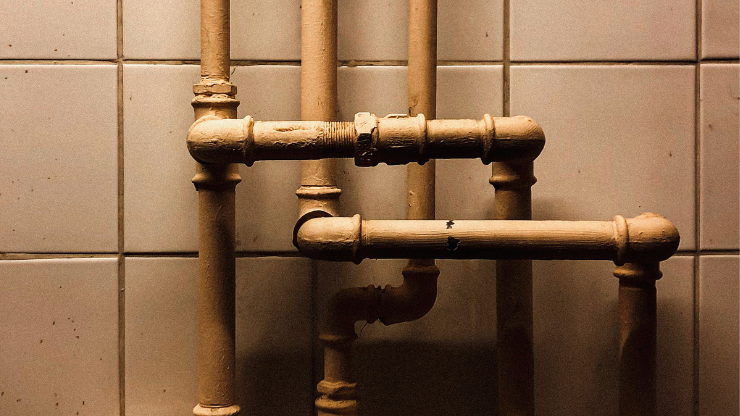
Late summer is when a lot of Snohomish, King, and Skagit County homeowners finally notice something they have been half-ignoring for months.
The shower loses pressure the second someone starts the dishwasher. The first water out of the tap in a guest bathroom runs discolored. A stain appears on a ceiling with no clear source.
Individually, those are easy to write off. Together, they may point to the same issue: supply pipes that have reached the end of their working life.
Much of the housing stock across the Pacific Northwest region was built well before 1990, and a good share of it still has its original water lines. Pipe failure rarely announces itself with a burst — it shows up as a dozen small annoyances first. Knowing which annoyances matter is what separates a planned repipe from an emergency call and repair.
At Machias Power and Plumbing, the same team that has handled electrical panels, generators, and rewires across the area now brings the same hands-on, no-sales-pressure approach to our plumbing and repiping work.
Which Pipes Are Actually the Problem
Not every old pipe needs to come out. Knowing what is behind your walls is the first step.
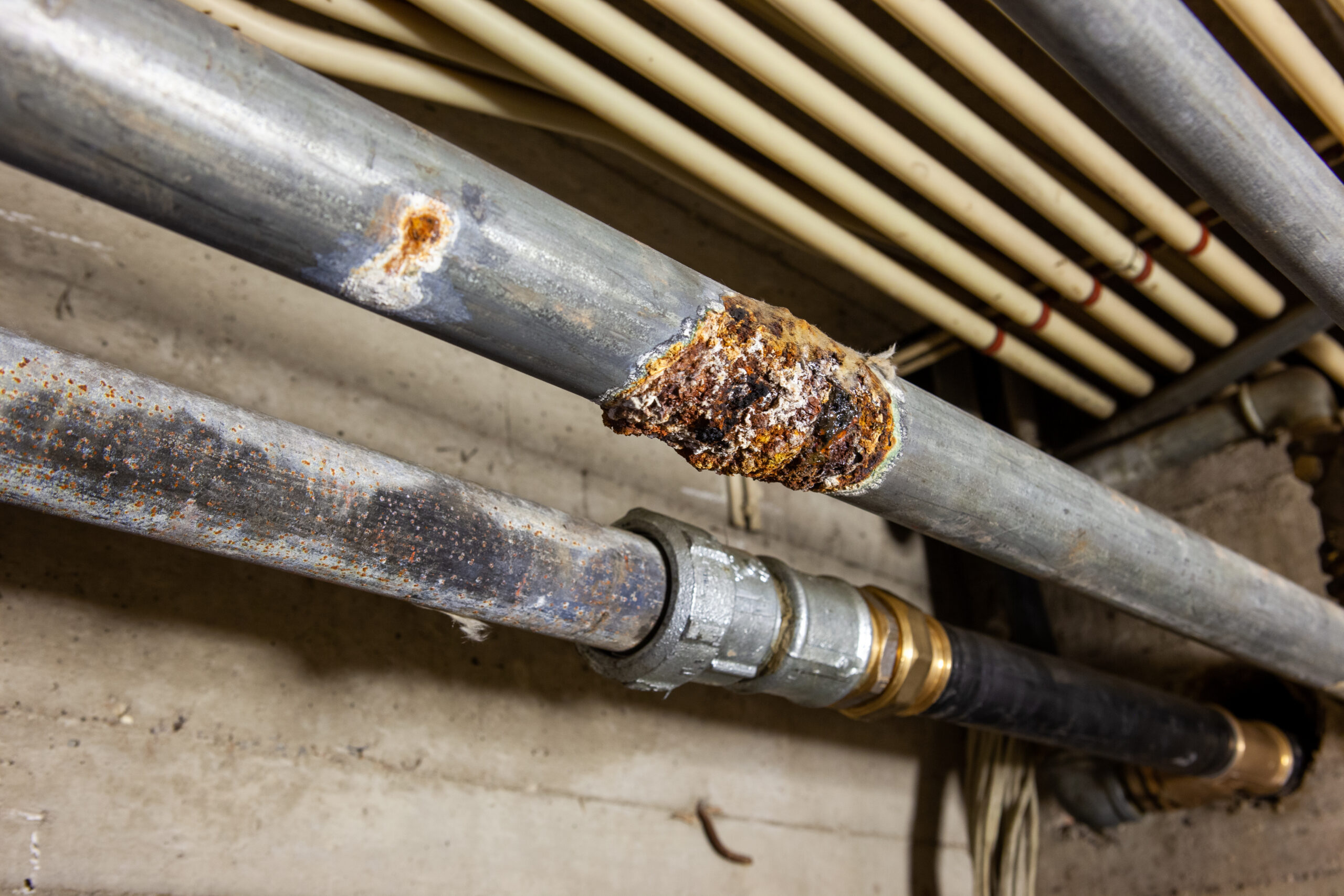
Galvanized steel was standard in homes built from roughly the 1930s through the 1970s. It was engineered for a 40- to 50-year service life, which means nearly every galvanized system still in service is running past its design life. Galvanized steel pipes fail from the inside out through a process called tuberculation, where rust builds up inside the pipe and narrows the opening until flow drops off. While galvanized steel pipes do not originally contain lead as a primary material, research suggests they can accumulate it through their ability to trap and absorb lead through other upstream sources (e.g. older lead service lines and corroded plumbing components). Galvanized steel’s zinc coating has been similarly scrutinized, and has prompted replacement for more contemporary and effective materials.
Polybutylene is another piping material worth knowing by name. It was installed in roughly 10 million U.S. homes between 1978 and the mid-1990s. It’s usually grey (though it also shows up in white, silver, black, or blue), and is often stamped with the code PB2110. It is flexible and occasionally curved rather than rigid, typically ½” to 1″ in diameter, and only used for supply lines (never drains or vents). Polybutylene fails differently than steel. Research has found certain disinfectants react with the material and cause it to flake and fracture from within, so leaks can happen without warning rather than building up gradually. Production for the plastic ceased in the mid-1990s after successful class action lawsuits against PB manufacturers.
Older copper is generally the good news of the group, but it is not entirely immune. Copper remains a mainstream choice alongside PEX in modern installations. However, copper undersized for its flow, or run through aggressive water conditions, can develop pinhole leaks that show up as small, persistent drips or unexplained damp spots.
How Washington Water Shapes the Right Fix for Your Home
Water across most of this region is remarkably soft. That’s good news for fixtures and glassware, but it has quieter implications inside your walls. In hard-water regions, dissolved minerals deposit a thin layer of scale that acts as a barrier between water and metal. Soft water lays down no such layer, so the metal stays bare for its entire service life. Galvanized steel corrodes with nothing slowing it down, and copper faces a pitting pattern documented specifically in cold, soft water above pH 8.0 — very close to this region’s profile.
Homes on private wells across rural Snohomish and Skagit Counties are a different situation entirely, with iron, manganese, and pH varying from one aquifer to the next. That is why advice written for Phoenix or Chicago does not travel well. A recommendation built around preventing scale solves a problem this region does not have, and the right material for a repipe depends on knowing which water is actually coming into your home.
Warning Signs Worth Taking Seriously
Most homes give plenty of notice before a pipe lets go. The signs just tend to arrive slowly enough that people adapt to them instead of acting on them.
Signs that supply lines may be failing include:
- Water pressure that drops noticeably when two or more fixtures run at the same time
- Rust-colored, brown, or yellow water, especially first thing in the morning or after a fixture has sat unused
- A metallic taste, or rust staining that keeps reappearing in tubs, sinks, and toilet bowls
- Hot water that takes far longer to arrive than it used to
- Repeat leaks — the third pinhole repair in two years is a system telling you something
- Damp spots, warm floors, musty smells, or ceiling stains with no obvious source above them
- Visible corrosion, flaking, or bulging on exposed pipe in a crawlspace, basement, or garage
One sign that catches homeowners off guard is an insurance letter. Carriers have grown steadily less patient with known-problem materials, and some will require replacement within a set window or decline to renew coverage. Water damage claims traced to long-neglected pipe are also a common denial under maintenance exclusions. If a home is being sold, inspectors flag galvanized and polybutylene routinely, and buyers negotiate hard on both.
What a Repipe Actually Involves
Repiping sounds more disruptive than it usually is, and homeowners tend to imagine the worst version of it.
The work replaces supply lines — the pipes bringing fresh water to fixtures — not the drain and waste system. Most of it happens through targeted access openings rather than by opening up whole walls, and a well-planned job on a typical single-family home is measured in days, not weeks. Water is generally back on each evening.
Material choice usually comes down to PEX or copper. PEX is flexible, faster to run through finished walls, resistant to freezing damage, and less expensive. Copper remains a durable, proven option that some homeowners prefer, particularly where pipe will stay exposed. Repipe costs vary widely with home size, fixture count, and access. For example, homes with pipe buried under slab cost more than homes with pipe behind drywall, and permits and inspection are part of any legitimate job.
Questions worth asking yourself:
- Do you know what your supply lines are made of, and roughly how old they are?
- Has water pressure, water clarity, or hot water recovery changed noticeably in the past year or two?
- Have you paid for more than one leak repair recently, in different parts of the house?
- Would you know where your main shutoff is, and does it still turn?
Not sure on more than one of these? That is usually the point where an evaluation is worth more than another repair.
How Machias Approaches Repiping Work
As a local contractor serving Snohomish, King, and Skagit Counties, Machias Power & Plumbing sees the same combination over and over: original pipes, a few decades of well-intentioned DIY repairs, and PNW moisture that punishes anything already weakened.
The first step is figuring out what is actually there. That means checking exposed pipe in crawlspaces and utility areas, testing pressure, looking at water clarity at multiple fixtures, and identifying material and age before anyone quotes a number. Sometimes the honest answer is that a home needs a partial repipe of one problem run, or a pressure regulator, rather than a whole-house replacement.
Sometimes it’s the opposite, and patching one more leak is throwing money at a system that is finished.
Either way, the findings get explained in plain language, with the reasoning behind the recommendation and zero pressure toward the bigger job. Because we handle both electrical and plumbing, projects that touch both trades — a water heater replacement that needs a dedicated circuit, a well pump, a crawlspace that needs light and power to work in safely — are handled by one team instead of two contractors coordinating around each other.
Get a Straight Answer About Your Home’s Pipes
If your pressure has been slipping, if your water runs discolored, or if you have paid for one leak repair too many, it’s worth knowing what’s behind your walls before it decides for you. At Machias Power and Plumbing, we’ll assess your existing plumbing, explain what we find, and lay out realistic options.
To schedule an evaluation or discuss your repiping options, contact us today.